
For a property developer, architectural rendering is rarely about pretty pictures. It is the visual evidence that gets a scheme through a council, and the imagery that turns an empty site into contracted off-the-plan sales. Those two jobs, planning approval and presales, are also the two gates that decide whether a project funds and builds at all.
That changes how the spend should be thought about. A render package is a small, mostly fixed cost sitting against the much larger outcomes it controls: an approved development application, a construction facility released on the strength of qualifying presales, and a settlement that holds because buyers got what they were shown.
This guide looks at architectural rendering, also described as 3D architectural rendering or architectural visualisation, from the developer’s side of the table. It covers the main types of rendering and where each one earns its place, what councils and tribunals expect in a development application, how renders drive presales and finance, where imagery crosses into legal risk under Australian Consumer Law, what the work typically costs, and how to fit it into a feasibility. State-by-state differences are flagged throughout, because what one jurisdiction treats as optional another may treat as mandatory.
What architectural rendering actually does for a developer
It helps to separate the audiences. A render made for a sales campaign and a render made for a planning panel are different products with different standards, even when they show the same building.
Rendering does four things across a typical project. It tests and communicates a scheme during feasibility and design, so a development manager, a joint venture partner or a financier can see what the numbers describe. It supports a development application by showing a council or tribunal how the proposal sits in its context. It generates presales by giving buyers something concrete to commit to before a single slab is poured. And it manages settlement risk by setting accurate expectations, so the built product matches what was sold.
Get any of those wrong and the cost is not the render fee. It is a refused development application, a stalled launch, or a buyer walking away at settlement. That is the lens this guide uses throughout.
The main types of rendering, and where each one earns its place
Lumping every render into one feasibility line is the first mistake. The categories below carry different accuracy standards, different costs and different risk.
Concept and feasibility renders. Rough massing and form studies, often produced in design software during the early stages. Used to test scheme variants, brief a design team, and present to a joint venture partner or lender. Accuracy expectations are low and speed is the priority.
Planning renders and verified-view photomontages. Computer-generated imagery composited onto surveyed site photography to show how a proposal reads from defined viewpoints. Used for development applications, design review panels and contested appeals. Here, methodology is everything, and the imagery has to withstand scrutiny.
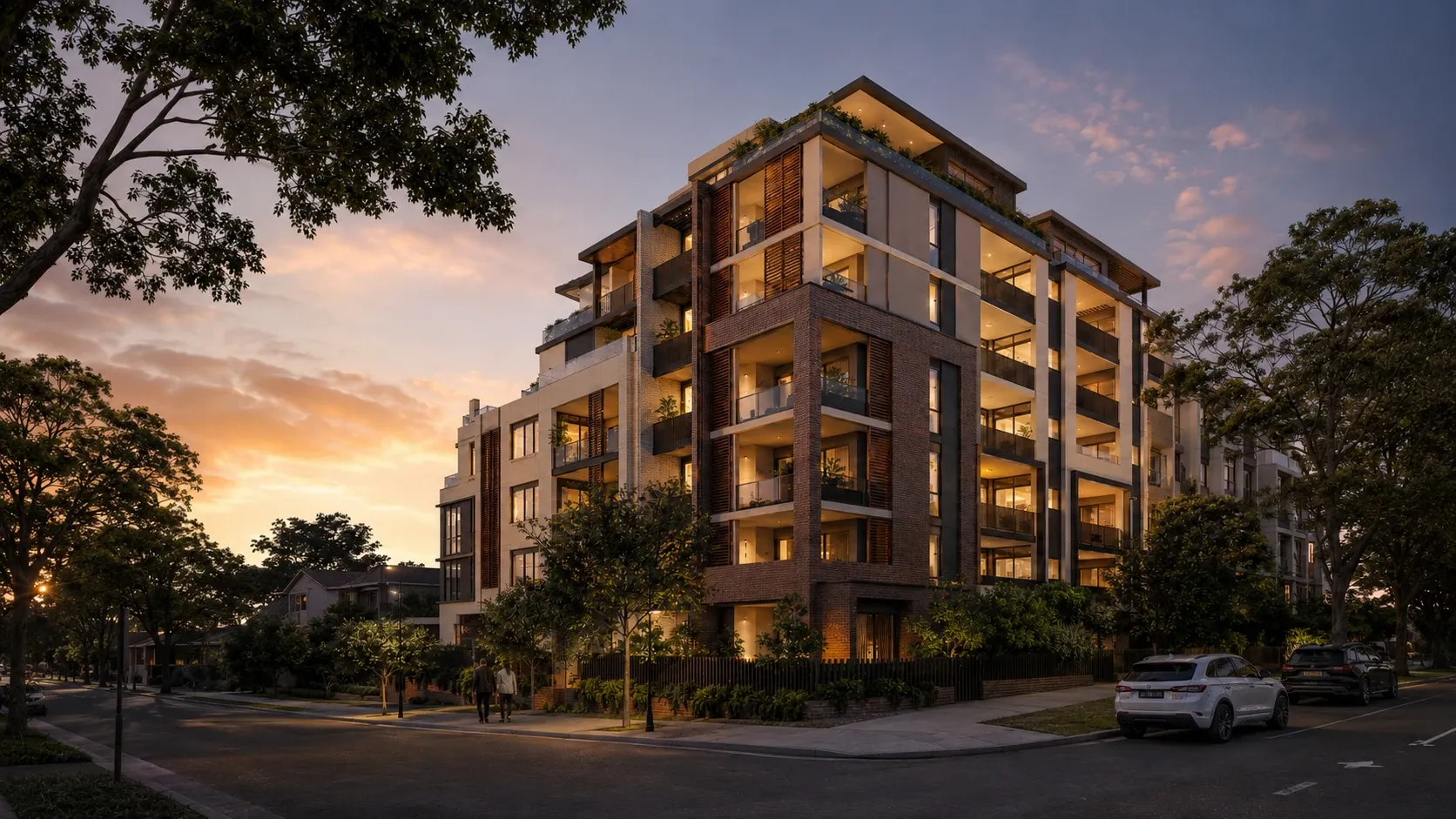
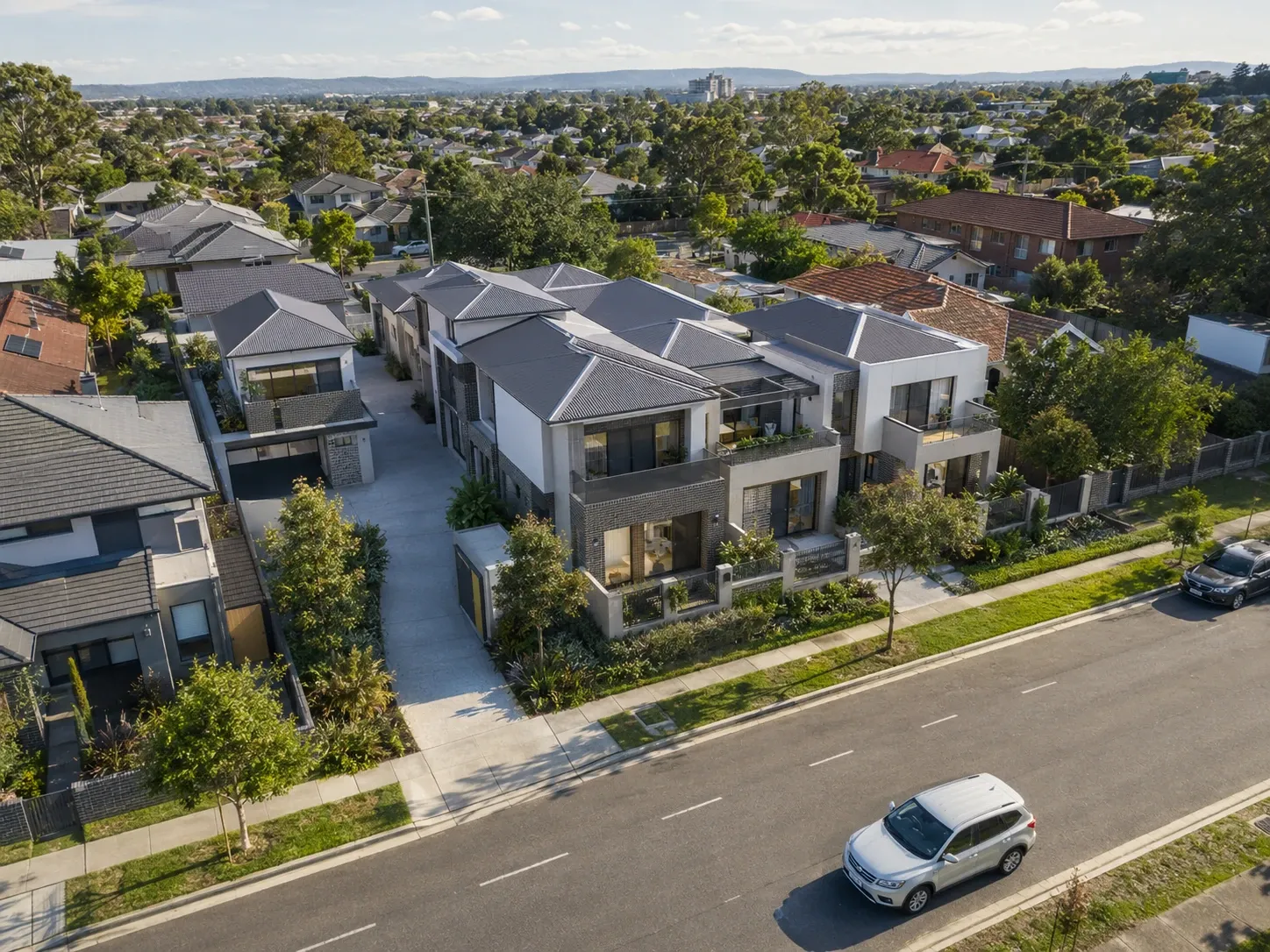
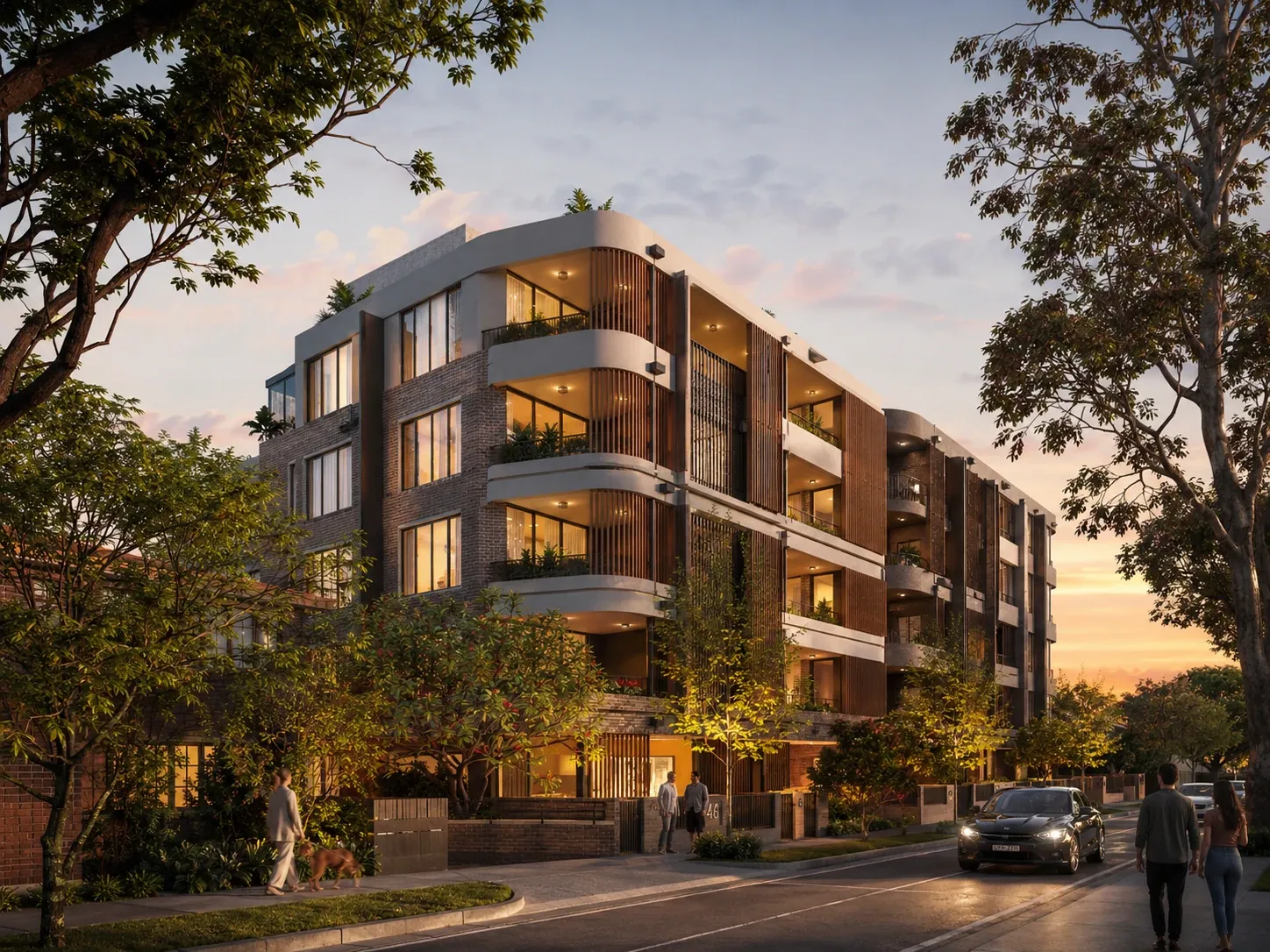
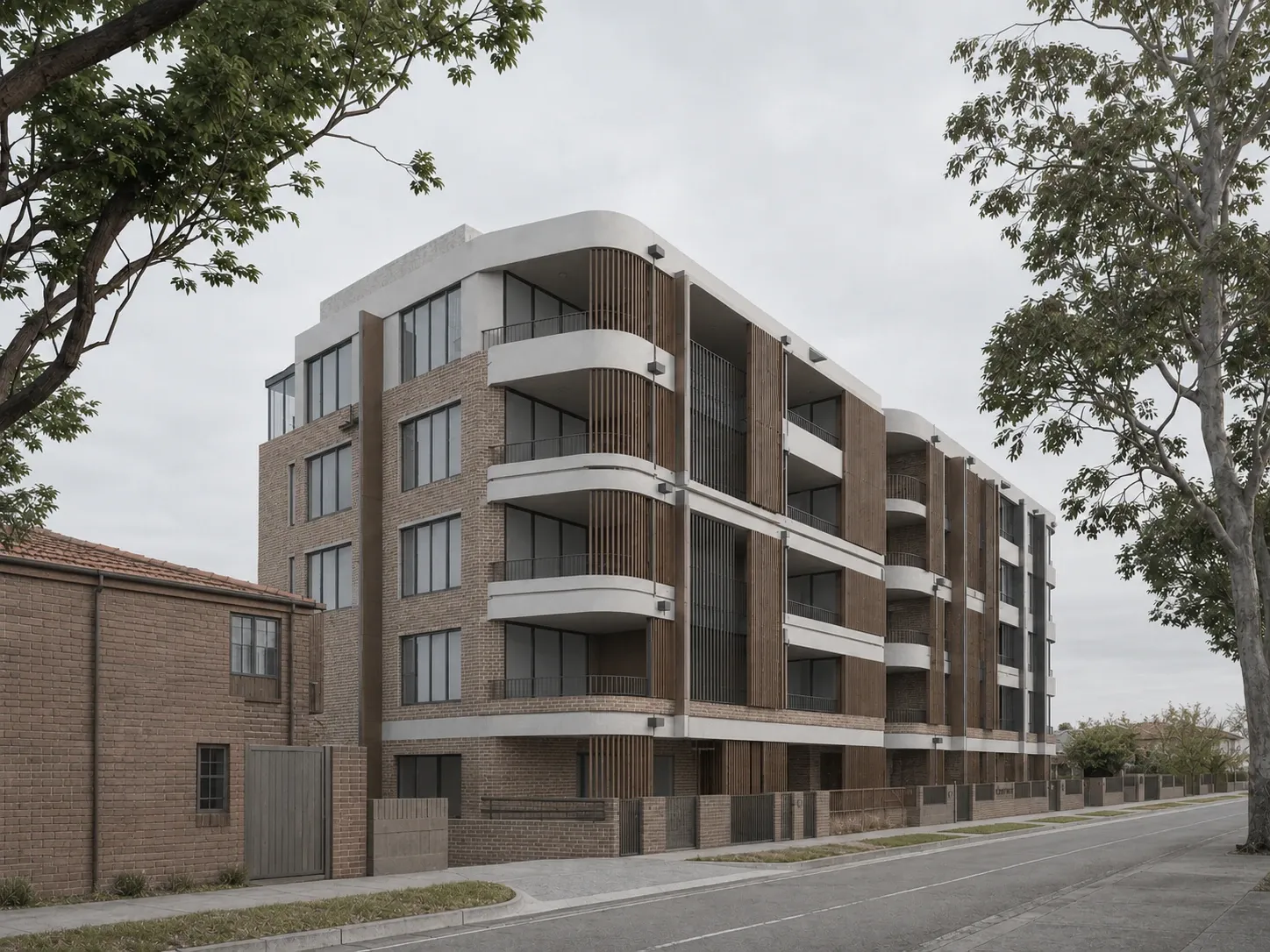
Marketing exterior renders. Hero shots, dusk scenes, streetscapes and aerials. The campaign workhorses that appear on hoardings, brochures, listing portals and display-suite walls. A photoreal standard is expected.
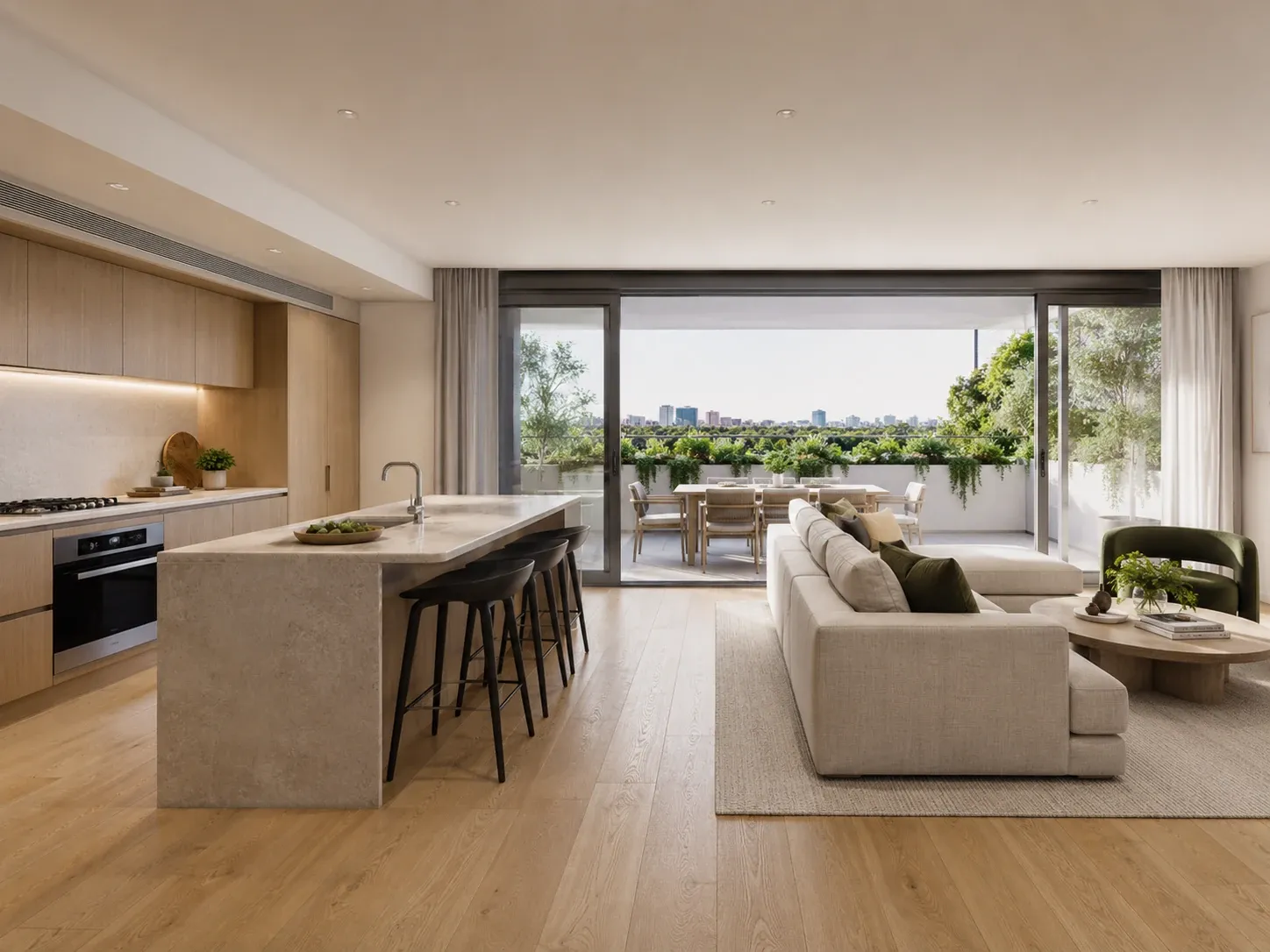
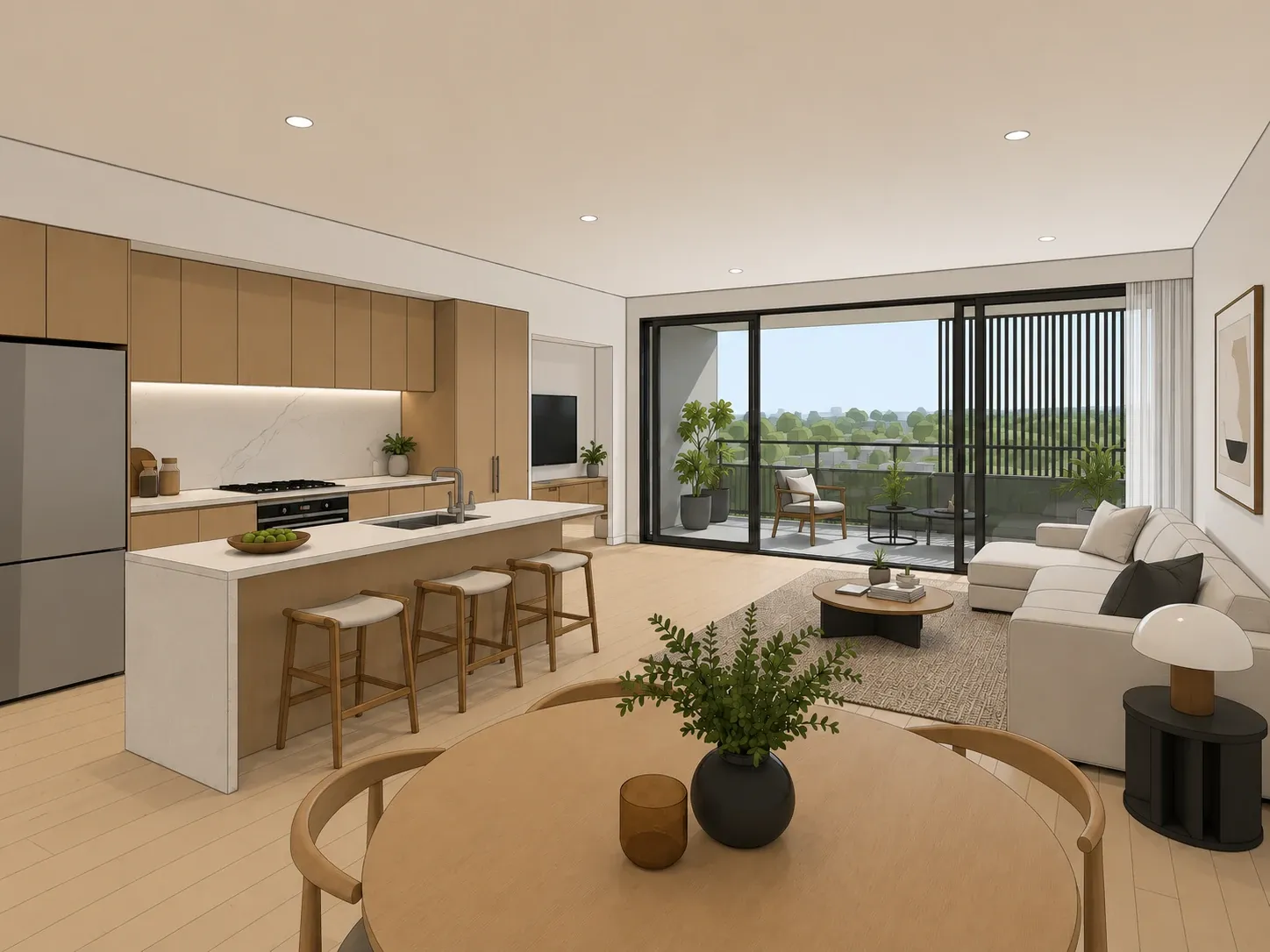
Marketing interior renders. Kitchens, living areas, bedrooms, bathrooms, balconies and shared amenity such as lobbies, gyms and rooftops, styled to the target buyer. This is where legal exposure concentrates, because any depicted feature that the building cannot actually deliver becomes a problem later.
Animation, fly-throughs and walk-throughs. Short cinematic sequences, increasingly delivered through real-time engines that a buyer can navigate on a touchscreen in a display suite.
Immersive formats. Virtual reality (VR) walk-throughs, 360-degree panoramas, augmented reality (AR) overlays and interactive digital models, mostly used in higher-end sales galleries.
The table below maps type to the stage where it typically earns its keep.
| Stage | Rendering type | Primary purpose |
|---|---|---|
| Feasibility and acquisition | Concept and massing | Test variants, pitch to partners and lenders |
| Design and development application | Planning renders, verified-view photomontages | Demonstrate context, bulk, scale and amenity |
| Appeal or tribunal (if contested) | Evidence-grade photomontages | Withstand expert scrutiny on view and visual impact |
| Pre-launch marketing | Hero exteriors, interiors, animation | Generate enquiry and presales |
| Display suite | VR, touchscreen, large-format stills | Convert buyers in the gallery |
| During construction | Progress and update imagery | Maintain buyer confidence, manage settlement risk |
Rendering and the development application
When a render is submitted to a council or tribunal, it stops being marketing and becomes evidence. The relevant deliverable is usually a verified-view photomontage: a three-dimensional model of the proposal, built to the approved geometry, composited onto a photograph taken from a surveyed camera position. The point is accuracy, not appeal.
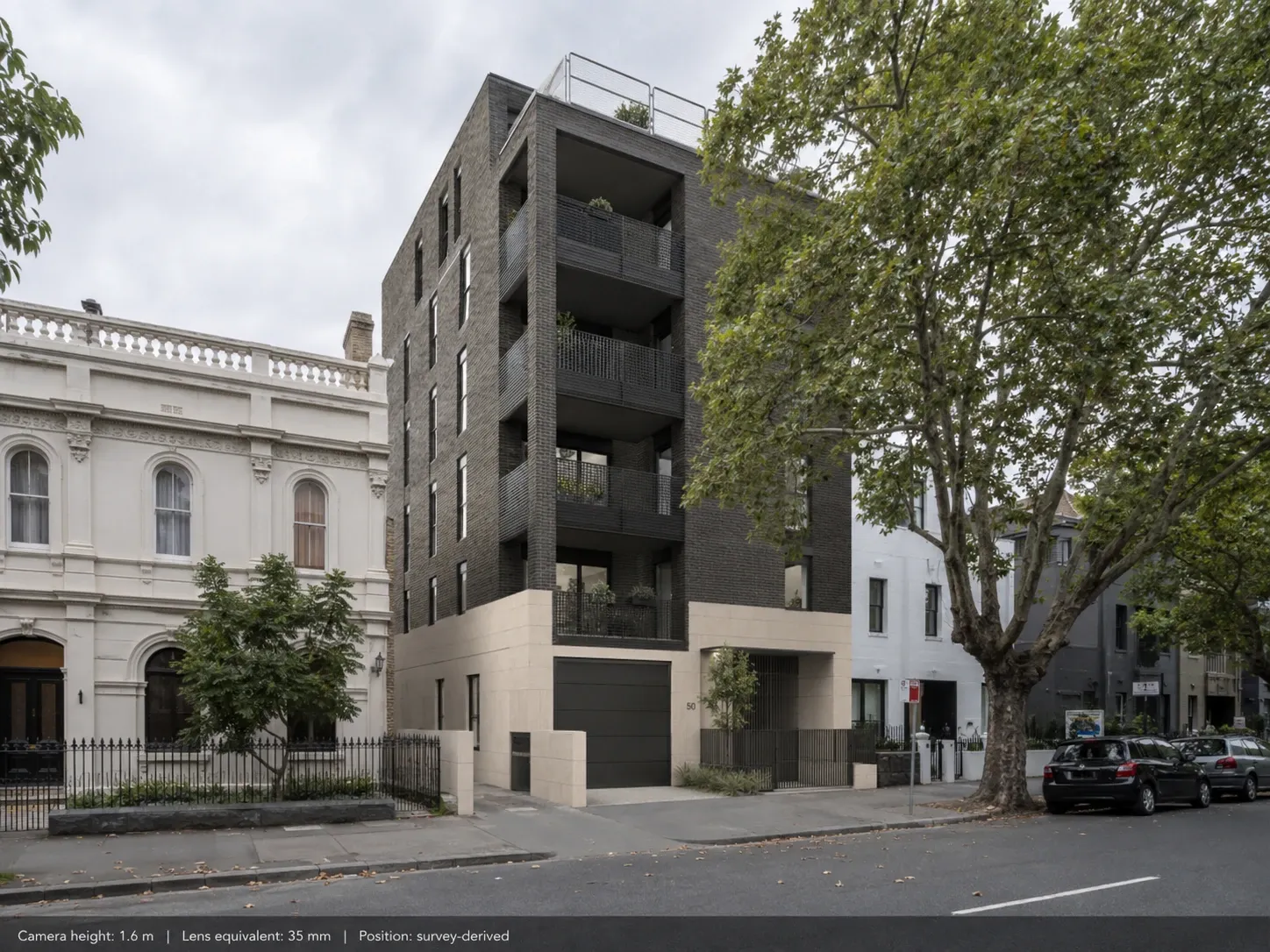
A defensible photomontage typically discloses its method. That commonly includes survey-derived camera coordinates and height, the camera body and lens used, the date and time of the base photography, the data sources for the model, and the software used to composite it. A render that cannot show this working is vulnerable the moment an objector or a commissioner questions it.
Requirements and expectations vary across the states and territories.
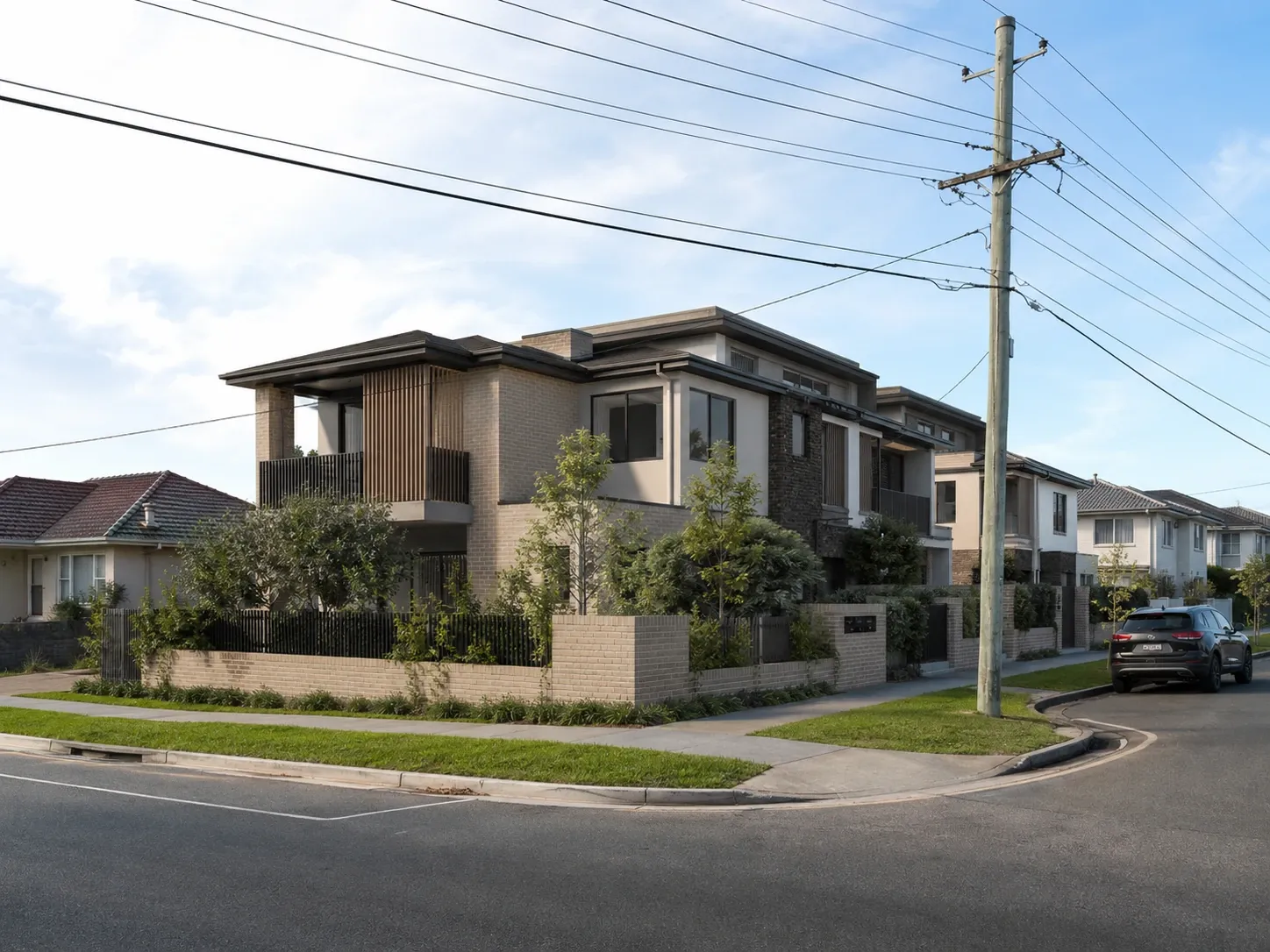
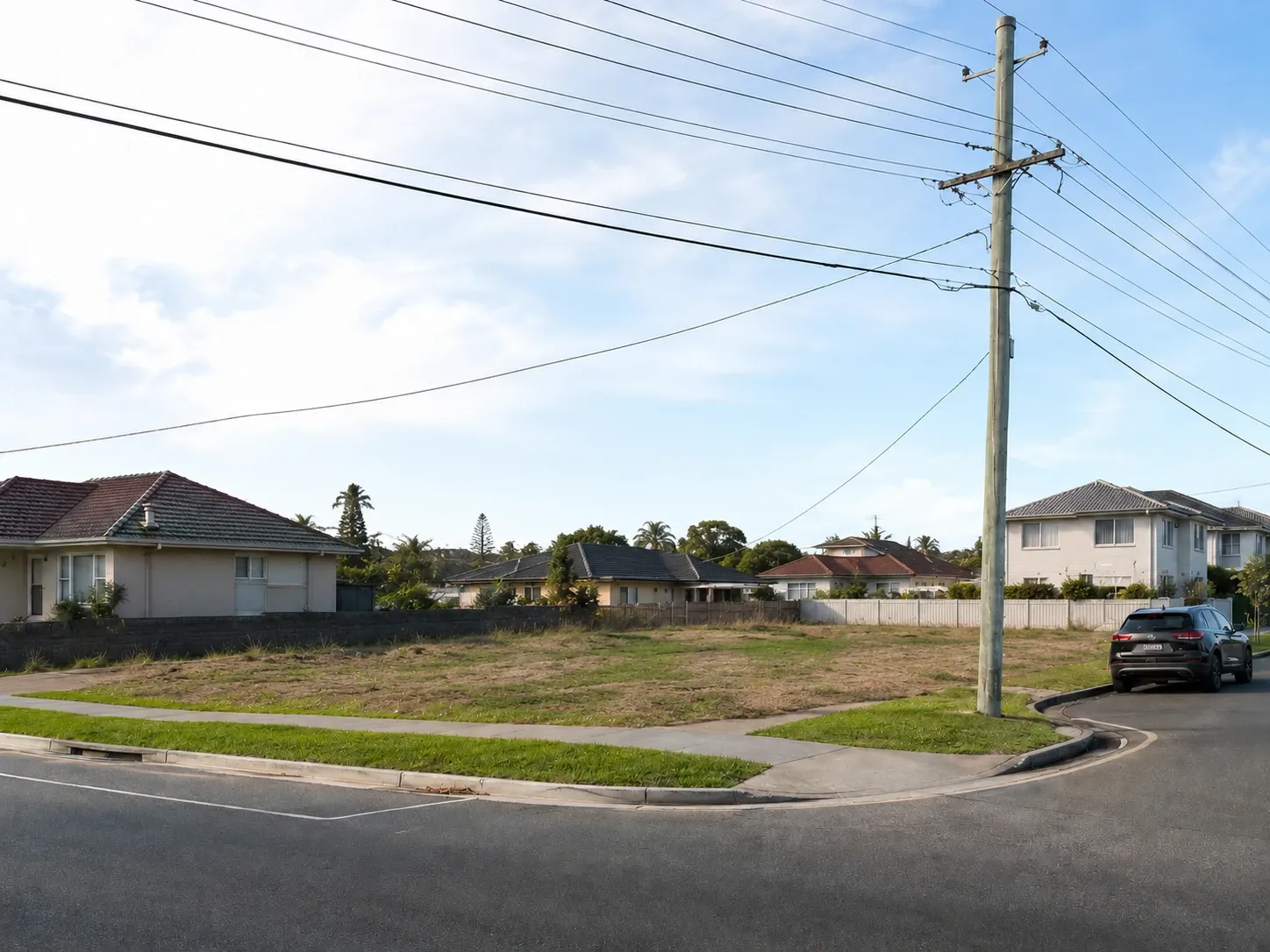 Before After
 New South Wales
New South Wales (NSW) has the deepest body of case law on visual impact, much of it from the Land and Environment Court (LEC). Two planning principles come up repeatedly. For private view loss, the four-step principle in Tenacity Consulting v Warringah [2004] NSWLEC 140 assesses the value of the views affected, the part of the property they are seen from, the extent of the impact, and the reasonableness of the proposal. For public-domain views, the two-stage principle in Rose Bay Marina Pty Ltd v Woollahra Municipal Council [2013] NSWLEC 1046 applies. Verified-view photomontages are the standard way these impacts are demonstrated and tested. The NSW Land and Environment Court publishes its planning principles and decisions.
Apartment schemes also fall under the Apartment Design Guide and the design quality framework formerly anchored in State Environmental Planning Policy No. 65 (SEPP 65). A Design Verification Statement from the qualified designer is generally required, and contextual renders supporting design quality principles such as context, scale and built form are routinely included in a development application.
Victoria
Victoria runs a codified expert-evidence regime through the Victorian Civil and Administrative Tribunal (VCAT). Practice Note PNVCAT2 governs how expert visual evidence is prepared and circulated, and decisions in the Austcorp line set out the documentation a photomontage should carry, including the preparer’s qualifications, the software, the data collection method, and the camera details. The practice note points toward a standard lens equivalent and a pedestrian eye-level camera height, which is why drone-only imagery is often challenged: an elevated viewpoint can soften the very impact a tribunal is trying to assess. Planning Panels Victoria and VCAT publish the relevant practice notes.
Queensland
Queensland’s planning schemes, including Brisbane City Plan 2014 and the Gold Coast City Plan, are performance-based. Photomontages are not formally mandated, but they are effectively standard in impact-assessable Material Change of Use (MCU) appeals before the Planning and Environment Court, where visual amenity, bulk and scale outcomes are tested. Brisbane also operates a city-wide three-dimensional digital model that applicants increasingly feed massing into. The Brisbane City Council planning pages set out the citywide framework.
Western Australia
Western Australia (WA) is the one jurisdiction surveyed here with an explicit, codified council-stage requirement. The City of Perth’s major development application information kit states that a coloured photomontage or coloured perspective, or both, must be submitted showing the proposal in context within the streetscape from a pedestrian viewpoint, with further views required where bonus plot ratio is sought. The City licenses its own three-dimensional model to applicants for this purpose. State Planning Policy 7.0 and the apartment provisions in the R-Codes Volume 2 also drive design review expectations.
South Australia, the ACT and Tasmania
South Australia’s Planning and Design Code is performance-based and references visual massing and visual impact in its performance outcomes. Photomontages are commonly required for impact-assessed development and for major projects assessed through an Environmental Impact Statement, but they are not codified for ordinary performance-assessed apartment schemes. The PlanSA portal holds the Code.
The Australian Capital Territory (ACT) operates under the Territory Plan 2023, which requires consideration of a proposal’s probable impact and its suitability in the context of the site and its surrounds. The National Capital Design Review Panel generally expects contextual visualisations on larger schemes. The ACT planning system sets out the process.
Tasmania’s State Planning Provisions require visual impact assessment where the Scenic Protection Code or coastal codes apply, but there is no scheme-wide photomontage mandate. As a general rule, the larger and more contested the proposal, the closer the imagery needs to sit to verified-view standard.
For the broader approval process around these requirements, see the Feasly guide to development application approval in Australia.
Rendering and presales: the finance connection
The reason rendering is infrastructure rather than decoration is the way Australian apartment and townhouse projects are funded. Most bank construction facilities are conditional on qualifying presales. Industry commentary since the Australian Prudential Regulation Authority (APRA) tightened its stance in 2017 suggests lenders now commonly look for qualifying presales at or above 100 per cent of the committed debt, though this varies by lender, project and developer track record. The render campaign is the artefact that generates those contracts.
Put the numbers next to each other and the logic is obvious. Against a construction facility in the tens of millions, a marketing-render budget in the tens of thousands is a fraction of one per cent. If the campaign fails to convert presales, the facility does not draw down and the project stalls before it starts. That is why the render package belongs in the same conversation as the debt it unlocks.
Display suites sit at the top of this spend. Across the market, fitouts range from a few hundred thousand dollars for a modest prefabricated suite up to several million for a flagship sales gallery on a large precinct. The renders, animations and interactive content are the visual core of every one of those spaces.
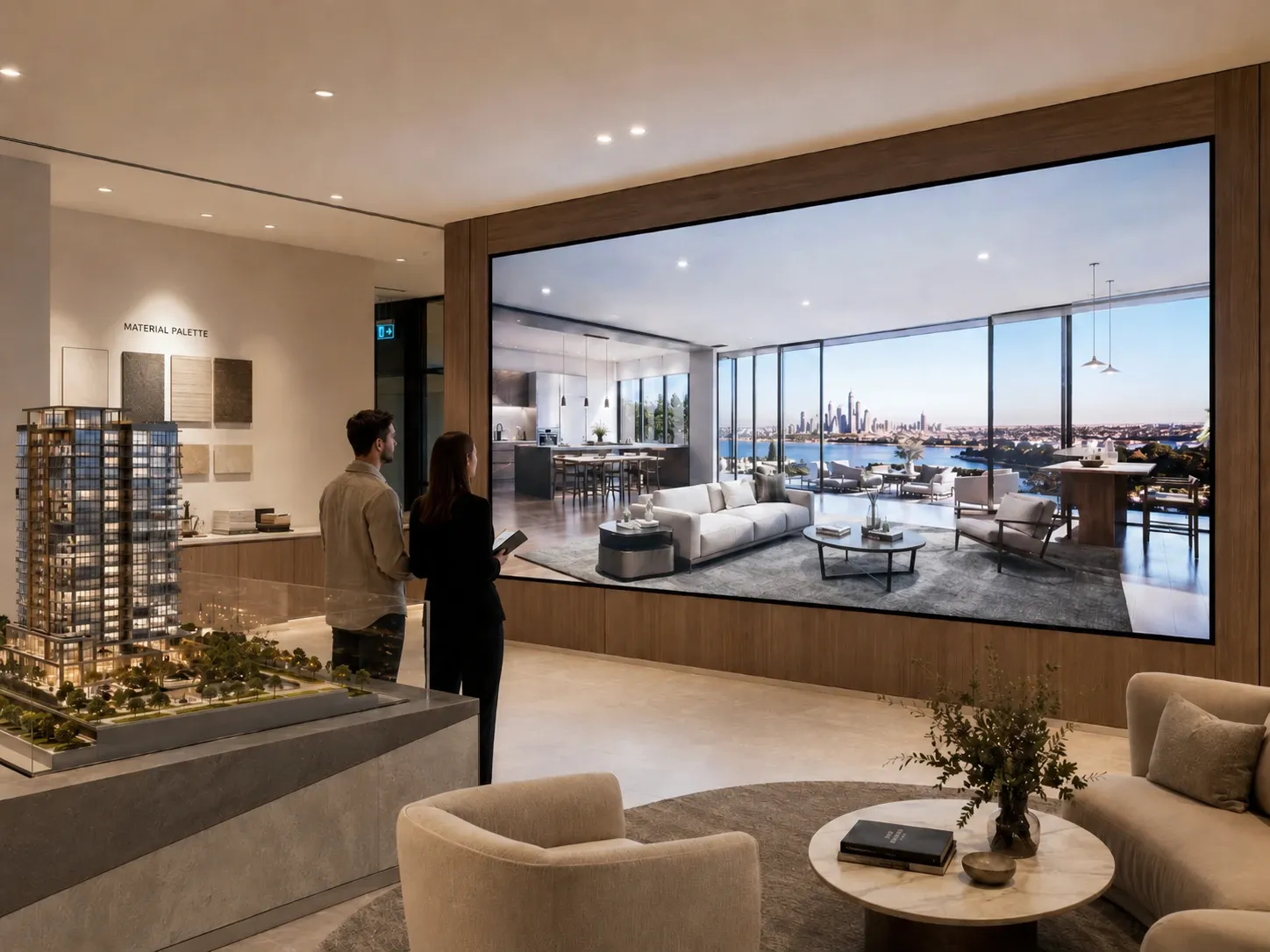
You can model a presales-driven construction facility across multiple funding stack scenarios in Feasly, so the cost of the campaign that generates those presales sits in the same model as the debt it helps release. For the mechanics of qualifying presales themselves, the Feasly guide to off-the-plan presales requirements goes deeper, and the construction finance guide covers how the facility is structured.
Where renders cross into legal risk: the Australian Consumer Law
A render that oversells the building is a liability, not an asset. The leading Australian authority is Ripani v Century Legend Pty Ltd [2022] FCA 242. A developer marketed an apartment using a hero render that depicted an apparent free-span opening between the living area and the terrace. The architect had advised that the deliverable opening would be narrower than the render suggested, at around 3.4 metres. The buyers contracted for roughly A$9.58 million in reliance on the imagery, and when the real opening was revealed they declined to settle and sought relief. The Federal Court found the render conveyed a misleading representation under section 18 of the Australian Consumer Law (ACL) and rescinded the contract, a result upheld on appeal.
Three findings matter for everyday practice. The words “artist impression” on the render did not cure the misrepresentation. Boilerplate exclusion clauses in the contract of sale did not displace the operation of the Australian Consumer Law (ACL). And the buyers being sophisticated did not prevent the conduct from being misleading. The Federal Court judgment and the Australian Competition and Consumer Commission’s guidance on false or misleading claims are worth reading before a campaign launches.
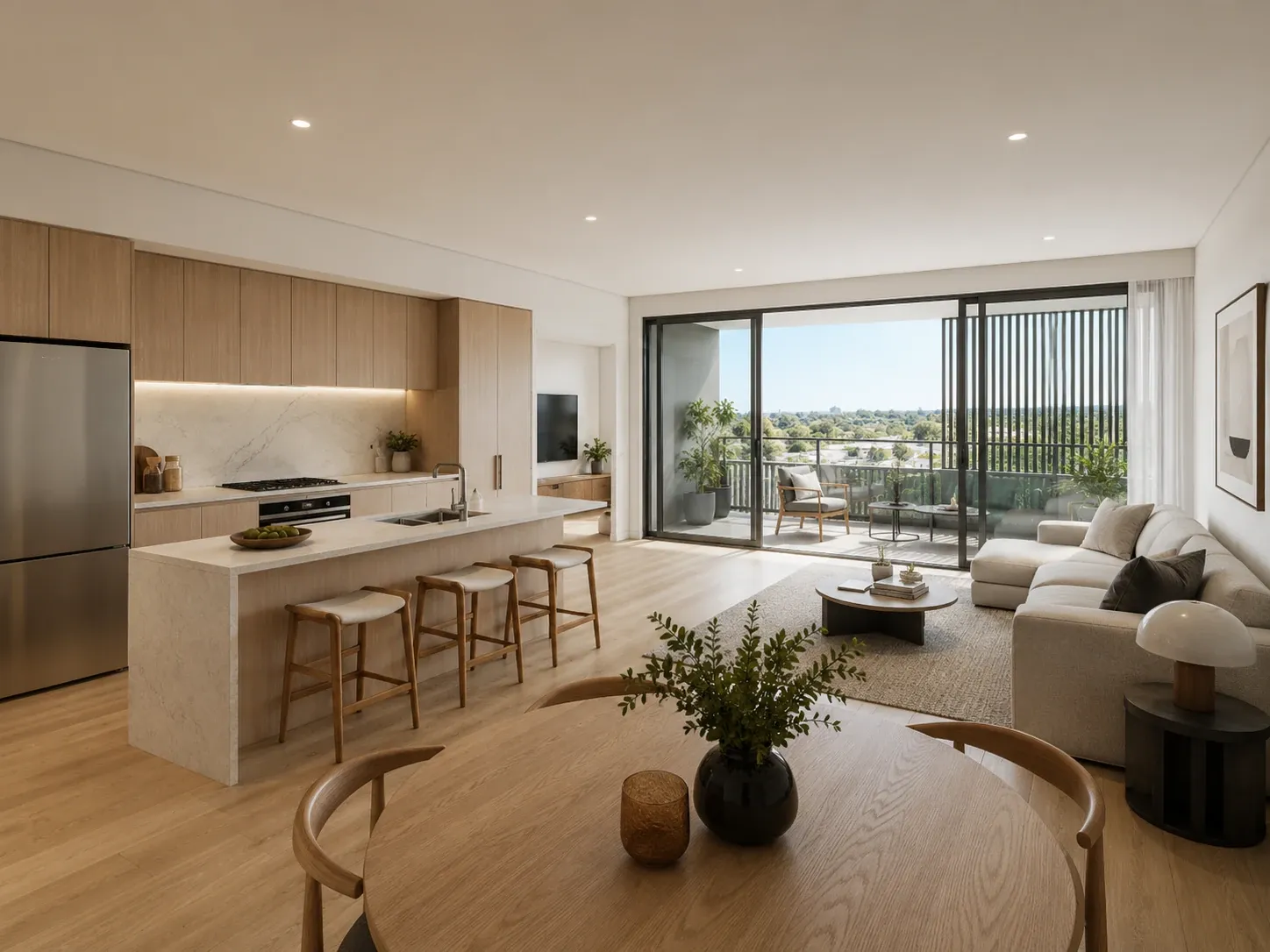
 Before After
 The practical controls are straightforward and cheap relative to the downside. The architect should sight-check every marketing render against the current construction drawings before it is published. Any feature that may not be deliverable, such as a free span, a ceiling height, a view corridor or a particular finish, should be rendered conservatively or carry a disclaimer drafted to that specific render rather than a generic brochure footnote. When the design changes, the renders should be updated rather than the disclaimer expanded. And the off-the-plan contract should reference the deliverable plans and finishes schedule, not the render images.
None of this is legal advice, and specific advice should be taken on disclaimer wording. The point for a developer is that an accurate render workflow is a risk control, not just a marketing choice.
What rendering costs in Australia
Pricing varies by city, studio, complexity and the number of revisions, so treat the ranges below as a planning guide rather than a quote. They are expressed in Australian dollars and reflect typical 2025 to 2026 market pricing.
| Render type | Typical range (A$) |
|---|---|
| Concept exterior still | 300 to 2,500 |
| Marketing exterior hero | 1,500 to 6,000+ |
| Interior still (apartment) | 800 to 5,000 |
| Aerial or streetscape | 1,800 to 10,000+ |
| Verified-view photomontage (council or court grade) | 1,500 to 8,000+ |
| 60-second fly-through animation | 4,000 to 25,000+ |
| 360-degree panorama | 800 to 4,000 |
| Full VR sales-suite build | 5,000 to 40,000+ |
A few patterns hold across the market. Once a three-dimensional model has been built, additional images are usually discounted, so a five-image package is far cheaper per image than a single still. Verified-view photomontages cost more than marketing renders of the same building because of the survey and methodology behind them. Animation is priced by finished output, often per second, so a tight edit costs less than a long one. And turnaround stretches from a few days for a single marketing still up to six to ten weeks for a photomontage that needs a surveyor booked into the schedule.
 Before After
 There is also a wide spectrum on the supply side, which the next section unpacks. At one end sit lightweight tools that generate imagery quickly and cheaply but cannot guarantee geometric accuracy. At the other sit established studios producing premium, methodology-grade work on longer timelines. The right choice depends entirely on what the render has to do.
Choosing the right rendering approach
Think of the market as a spectrum rather than a binary, with three broad groups.
At one end sit established computer-generated imagery (CGI) studios. Australian names such as Binyan Studios, Studio Jam and Two o Seven produce photoreal, campaign-grade and planning-grade work, with the control and documented methodology that a development application or a flagship launch tends to need. The trade-off is usually a higher price and a longer lead time, and major image sets often have to be booked weeks ahead. Specialist planning-focused studios that prepare verified-view photomontages sit in this group too, because that work has to withstand scrutiny at a panel or tribunal.
At the other end sit lightweight artificial intelligence (AI) tools. Browser-based, sketch-to-image platforms such as ArchiVinci, MyArchitectAI and Midjourney, along with the artificial intelligence (AI) features built into design software like Veras and D5 Render, can generate imagery from a sketch, a photo or a text prompt in minutes. They are fast and inexpensive and well suited to early concept exploration, but they generally cannot stand behind a claim about height, setback or overshadowing, because they are not working from accurate geometry.
Between those two ends sits a newer group of technology-led studios that blend accurate underlying geometry with artificial intelligence (AI) assisted production, aiming to hold output quality while compressing turnaround. reIMG is one example, taking a resolved design and turning it into campaign-grade marketing imagery and video. The point is not that one group is better than another. Each suits a different deliverable, and the right choice depends on what a given image has to do.
Whichever route a developer takes, six questions tend to separate good providers from expensive ones.
- Planning literacy. Does the studio understand the Apartment Design Guide, the Victorian Civil and Administrative Tribunal (VCAT) practice notes and the relevant view-impact principles? For a development application this is not optional.
- A real geometry pipeline. Can the studio accept the architect’s model and work from accurate geometry, rather than re-drawing from a sketch? Council-bound imagery needs this.
- A revision policy in writing. How many rounds are included, what counts as a revision, and what do extra rounds cost? “Unlimited revisions” with no definition is a warning sign.
- An Australian context library. Native planting, local streetscape elements and accurate daylight and shadow modelling. Offshore-produced renders often read as foreign because of the plant species and joinery.
- A turnaround commitment. Especially against a tribunal circulation deadline or a fixed launch date.
- Clear ownership of the output. Who owns the final image and the underlying model, so the renders can be updated later if the relationship ends.
A useful rule of thumb: match the tool to the deliverable. Lightweight generative tools and fast technology-led workflows suit concept iteration, marketing variants, twilight scenes and social content where the building geometry has already been signed off. A studio with documented planning methodology suits council-grade photomontages and tribunal evidence, where accuracy is forensic and the imagery may be cross-examined.
Artificial intelligence and the future of rendering
Artificial intelligence (AI) has reorganised the bottom and middle of the rendering market without yet displacing traditional methods for the most demanding work. Three layers are in common use.
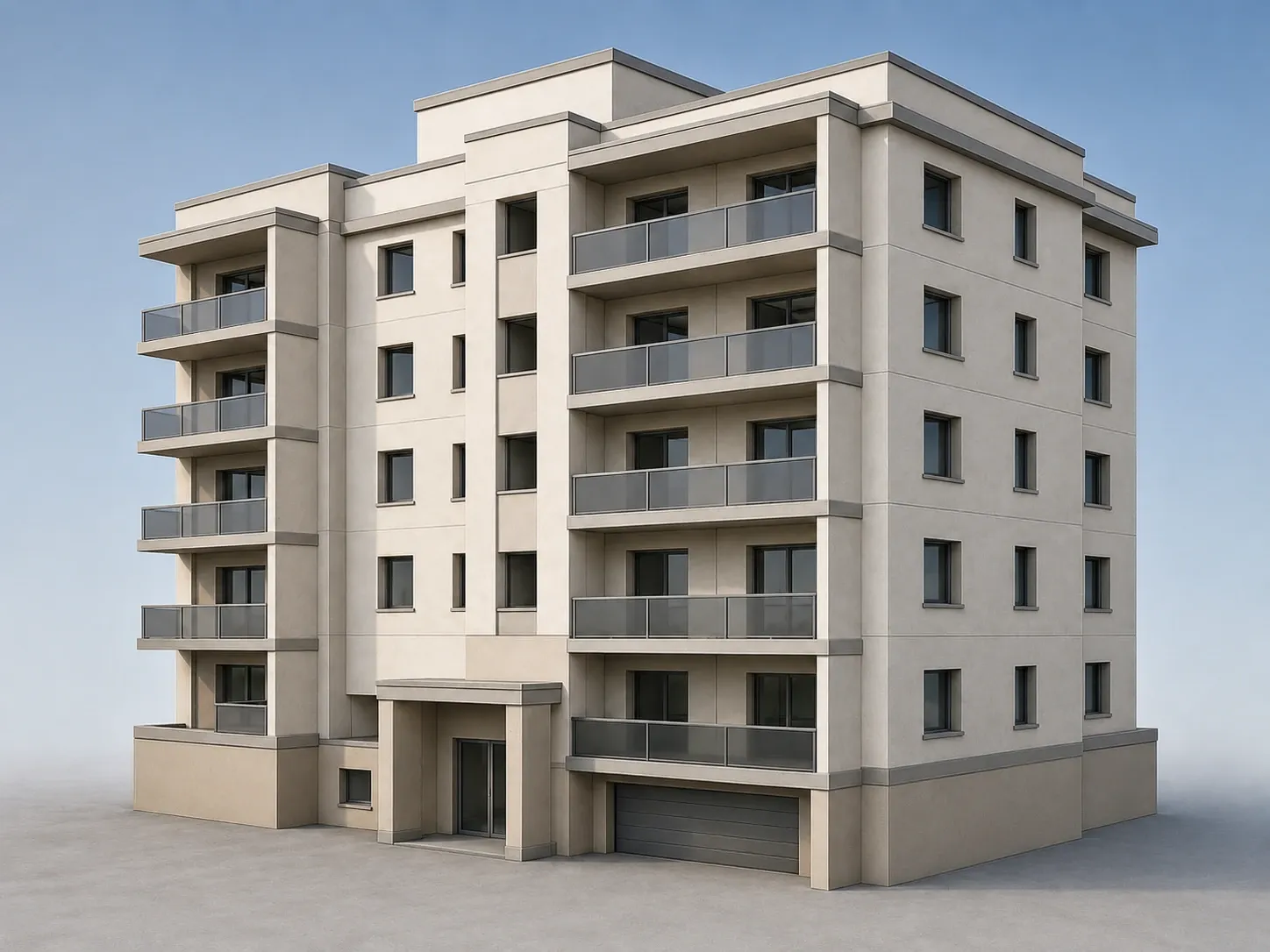
The first is AI features inside established design and rendering software, where the geometry stays accurate and the tools accelerate materials, lighting and post-production. Most architect-led practices have moved here. The second is purely generative tools that produce imagery from a sketch, floor plan or photo with no underlying three-dimensional model. These are fast and cheap and well suited to early mood and concept work, but they cannot guarantee the dimensional accuracy a planning submission needs. The third is technology-led studios that combine accurate inputs with AI-assisted production and human quality control, aiming to deliver studio-grade output on a shorter timeline.
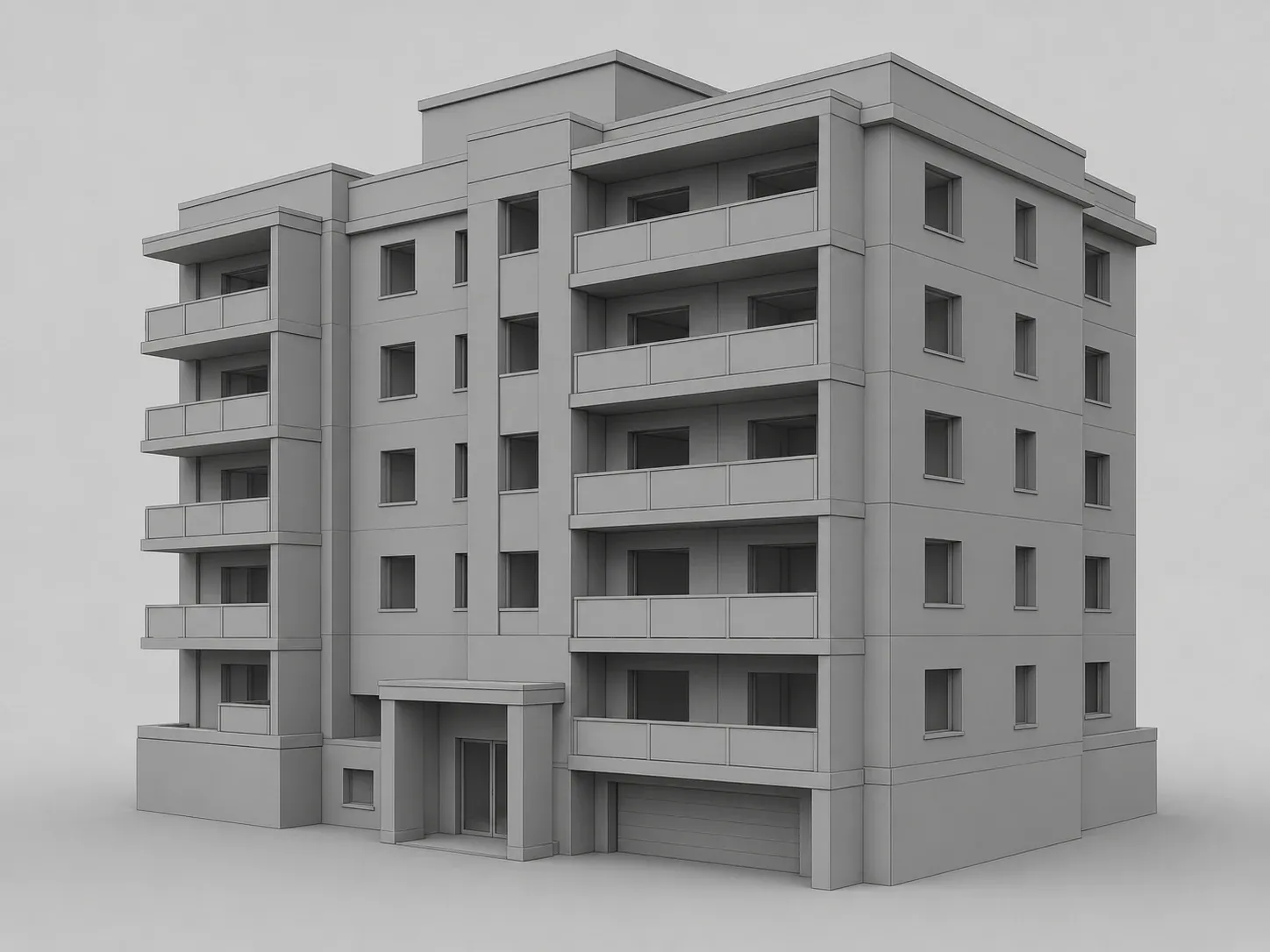 Before After
 The honest position for 2026 is that traditional computer-generated imagery (CGI) remains the more reliable choice where accuracy, consistency and traceability matter, such as approvals and commercial deliverables, while artificial intelligence (AI) adds the most value in early design, rapid iteration and concept exploration. For a sophisticated developer the old “AI versus traditional” framing is already beside the point. The real question is which tool fits which deliverable across the project, and that answer changes from a concept render to a verified view.
Common mistakes developers make with rendering
Most rendering problems trace back to a handful of patterns.
Briefing renders before the design is locked, then burning the revision allowance and inflating cost when the façade or finishes change. Brief against a frozen design milestone, not a moving one.
Treating development application renders and marketing renders as the same product. They have different accuracy standards and different scope, and they should be briefed separately even when they come from the same studio.
Skipping the survey on a photomontage to save a small amount, then finding the imagery cannot withstand questioning at a panel or tribunal.
Letting the marketing agency drive render scope. Agencies optimise for visual impact, which is the right instinct for a campaign but the wrong one for a planning submission or for a feature that may not be buildable. The architect should sign off every image before it is published.
Depicting hero features the building cannot deliver, which is the Ripani risk in miniature.
Treating renders as a one-off spend. When value engineering or design changes alter the building during construction, the campaign imagery needs to keep up, or the gap between render and reality reappears at settlement.
How rendering fits your feasibility
The cleanest way to carry rendering in a feasibility is as more than one line, because it is more than one cost. Planning renders and verified-view photomontages belong in soft costs or consultants, alongside the rest of the development application work. Marketing renders, animation and immersive content belong in the marketing budget, which on apartment projects often runs at roughly three to five per cent of gross realisation value (GRV). Buyer-update imagery during construction belongs with marketing and holding costs through the build.
Carrying them separately keeps the scope honest and stops a single “renders” line from hiding either an under-resourced council submission or an over-built marketing package. In Feasly, you can hold these as discrete soft cost and marketing line items in a feasibility, then see how the spend moves the funding stack and the project return rather than treating it as an afterthought. For the wider picture of how these inputs come together, the Feasly property development feasibility guide sets out the full model.
As a sense of scale, total rendering spend across the life of a boutique apartment scheme often lands somewhere in the low tens of thousands to low hundreds of thousands of dollars depending on animation and immersive content, against a gross realisation value (GRV) measured in the tens or hundreds of millions. In other words, a fraction of a per cent of revenue, controlling two of the gates that decide whether the project happens.
Frequently asked questions
How much does architectural rendering cost in Australia? A single marketing still typically ranges from around A$800 to A$5,000 or more depending on complexity and the studio, while a five-image package is usually cheaper per image once the model is built. Verified-view photomontages for a development application cost more because of the survey and methodology behind them, often from around A$1,500 to A$8,000 per view. Animation and virtual reality (VR) builds run higher again.
Do I need renders for a development application? It depends on the jurisdiction and the scale of the proposal. Western Australia’s City of Perth explicitly requires a photomontage or perspective for major applications. New South Wales (NSW), Victoria and Queensland do not mandate them for every application, but verified-view photomontages are effectively standard for contested or impact-assessable schemes, and the larger the proposal the closer the imagery needs to sit to verified-view standard.
What is the difference between 3D rendering and architectural visualisation? The terms are largely interchangeable in practice. Three-dimensional rendering usually refers to producing a single image or sequence from a model, while architectural visualisation is the broader discipline that also includes animation, virtual reality (VR), interactive models and verified-view work. For a developer the more useful distinction is between marketing imagery and planning-grade imagery, because the accuracy standards differ.
Can I use artificial intelligence renders for a council submission? For early concept work, yes. For a verified-view photomontage going to a council, panel or tribunal, purely generative artificial intelligence (AI) tools are generally not appropriate, because they cannot guarantee the geometric accuracy and documented methodology that planning evidence requires. Technology-led studios that combine accurate geometry with AI-assisted production are a different proposition to a sketch-to-image tool.
How long do architectural renders take? A single marketing still can be a few days. A five-image package is commonly two to three weeks. Animation often runs four to six weeks. Verified-view photomontages can need six to ten weeks once a surveyor has to be booked, so it pays to start planning imagery early rather than against a hearing date.
Can an off-the-plan buyer walk away if the render was misleading? In the right circumstances, yes. Ripani v Century Legend confirmed that a misleading render can support rescission of a contract under the Australian Consumer Law (ACL), and that generic “artist impression” labels and boilerplate exclusion clauses may not protect the developer. The safest approach is to keep renders accurate to the deliverable design and take specific legal advice on disclaimers.
This guide is general information for property developers and is not legal, financial or planning advice. Planning requirements and consumer law obligations vary by jurisdiction and by project, and specific professional advice should be taken on any particular development.